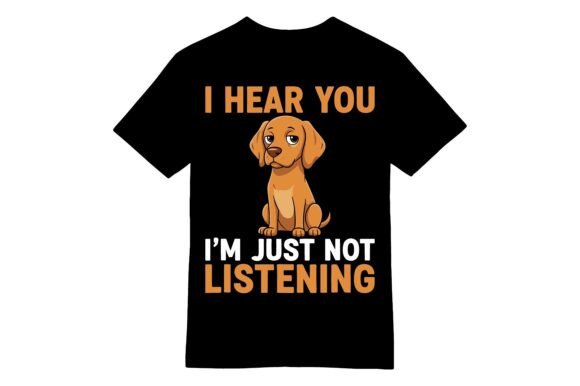
Reviewing the Cute Puppy Not Listening Design
As a designer who spends more time staring at stitch simulations than actual fabric, I have learned that not every Graphics asset translates well to thread. We often see digital art that looks crisp on a screen but turns into a tangled mess under the needle. That is why I took a close, critical look at the Cute Puppy Not Listening Funny T-shirt design before committing it to any client project. This is not just about whether the image is adorable—though it certainly is—but whether it holds up as a functional machine embroidery design for real-world applications.
The first impression of this piece is one of playful defiance. The visual personality is distinct: a sassy, stubborn companion that resonates deeply with dog owners. For those of us in the craft business, recognizing this emotional hook is vital. It is not merely a picture of a dog; it is a relatable moment captured in line work. However, from a technical standpoint, the mood must be supported by clean execution. The layout appears balanced, with a central figure that draws the eye immediately. When evaluating such T-Shirt Designs, I always look for clear separation between elements. If the lines are too close, the thread will bridge gaps, ruining the clarity of the joke. Fortunately, this design seems to respect the physical limitations of embroidery, offering enough breathing room for the stitches to sit properly without overcrowding.
Real-World Application and Fabric Choice
I recently tested a similar concept for a custom order involving a cotton tote bag. The client wanted a humorous gift for a friend who loves her stubborn terrier. This scenario is perfect for the Cute Puppy Not Listening Funny T-shirt motif. Tote bags offer a stable, flat surface that is forgiving for beginners and professionals alike. The fabric texture of canvas provides a sturdy base that prevents the design from puckering, a common issue with lighter materials.
However, versatility is key for any small shop product. I envision this design working exceptionally well on sweatshirts. Sweatshirt embroidery requires careful attention to stitch density. If the design relies heavily on dense fill stitch areas, it can make the garment stiff and uncomfortable. A design like this, which likely utilizes a mix of satin stitch for outlines and moderate fills for the body, strikes a good balance. It adds texture and value without turning a cozy fleece into a cardboard shield. For custom apparel, this balance is non-negotiable. Customers want to wear their humor, not feel weighed down by it.
Another excellent application is the embroidered patch. Patches are trending among Etsy sellers and boutique brands because they allow for intricate details on items that are difficult to hoop directly, like backpacks or denim jackets. By stitching this design onto a twill backing and cutting it out, you create a durable, professional-looking accessory. This approach also mitigates risks associated with stretchy fabrics. If you were to embroider directly onto a thin, stretchy t-shirt, the tension could distort the puppy’s face. A patch avoids this entirely, ensuring the finished product looks crisp regardless of the garment it is attached to.
Navigating Technical Challenges
While the aesthetic appeal is high, we must discuss where caution is needed. Any designer knows that small details are the enemy of low-quality digitizing. If this design includes tiny lettering or intricate facial features, it may not survive reduction for smaller hoop size projects. For instance, attempting to place this on a baby onesie requires scrutiny. Baby embroidery demands softer threads and less density to protect sensitive skin. If the original file is optimized for a 5x7 hoop, shrinking it to fit a 4x4 area might cause the stitches to merge, turning the puppy’s expressive eyes into black blobs.
Dark fabrics present another hurdle. If you plan to use this on a navy or black hoodie, you must check the thread colors carefully. A design that relies on subtle shading might get lost. In such cases, adding an underlay or choosing high-contrast thread colors is essential. I always recommend running a test on scrap fabric first. This is not just about checking for breaks; it is about verifying that the stabilizer you are using can handle the pull of the thread. For textured fabrics like towels or pique polos, a cut-away stabilizer is often necessary to maintain shape over time, especially for items that will undergo frequent washing.
Curved surfaces, such as caps, require even more precision. The Cute Puppy Not Listening Funny T-shirt design would need to be centered perfectly to avoid distortion around the seam of a hat. If the design is too wide, it will wrap around the curve awkwardly. Always measure the available embroidery field on your specific cap style before purchasing or stitching. This level of diligence separates amateur hobbyists from professional commercial embroidery providers.
Enhancing Brand Value and Customer Trust
Why does technical precision matter for a funny dog design? Because it builds trust. When a customer receives a personalized gift that is neatly stitched, with no loose threads or distorted shapes, they perceive higher value. This perception drives repeat business and positive reviews. For digital embroidery file sellers, providing a well-tested, reliable design means fewer support tickets and happier customers. For those selling finished goods, it means your brand is associated with quality.
This design fits seamlessly into various seasonal campaigns. Think of holiday embroidery for pet lovers during Christmas or Valentine’s Day. A sassy puppy is timeless, but pairing it with seasonal colors can boost sales. It also works well for nursery decor, provided the scale is appropriate. A large version on a pillow cover can become a focal point in a child’s room, adding a touch of whimsy. The key is consistency. If your brand focuses on high-quality handmade items, every stitch must reflect that commitment.
Practical Notes for the Embroiderer
Before you load this design into your machine, take a moment to review the technical specifications. Since specific details like exact stitch count or file formats are not provided in the brief description, you must verify these with the source. Ensure the embroidery file format is compatible with your machine, whether it is PES, DST, or another standard. Check if the design is intended for applique design workflows or if it is fully stitched. Applique can reduce stitch count and add fabric texture, which might be desirable for certain projects.
Test the design in black and white mockups to evaluate contrast. Sometimes, color distracts from structural issues. If it looks good in monochrome, it will look great in color. Confirm licensing terms before selling. Many designers allow commercial use for finished physical items but restrict the resale of the digital file itself. Respecting intellectual property is crucial for maintaining professionalism in the creative community.
In conclusion, the Cute Puppy Not Listening Funny T-shirt design offers strong potential for a variety of embroidery project types. From tote bag design to custom apparel, its charm is undeniable. However, its success depends entirely on your preparation. Choose the right stabilizer, respect the limits of your hoop size, and prioritize fabric compatibility. By treating this fun graphic with professional rigor, you transform a simple image into a high-value asset for your business or a cherished keepsake for a loved one. Remember, the best designs are those that look effortless, even when they required careful planning to execute.